Polish foreign minister questions Orban stance after explosives found in Serbia
Jo Harper
April 06, 2026•Update: April 06, 2026
- Polish officials warn Moscow may try to exploit security scares in Central Europe
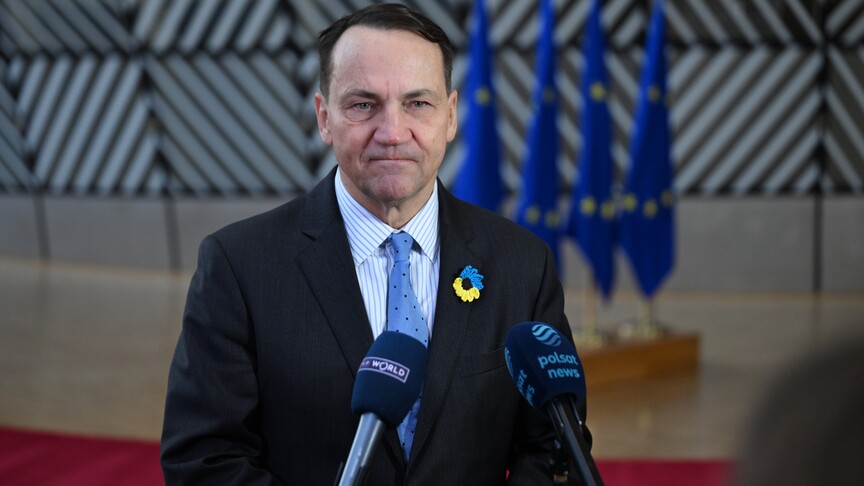
Polish Foreign Minister Radoslaw Sikorski on Monday questioned the timing of Hungarian Prime Minister Viktor Orban’s decision to convene Hungary’s security council after Serbian authorities said explosives had been discovered near gas infrastructure supplying Hungary.
“Suspiciously opportune timing,” Sikorski wrote on US social media platform X, referring to the incident coming less than a week before Hungary’s Apr. 12 parliamentary election, in which Orban’s ruling Fidesz party is facing its strongest challenge in years.
Orban said Sunday that Serbian President Aleksandar Vucic had informed him explosives had been found near the TurkStream pipeline extension in northern Serbia close to the Hungarian border. He then convened an emergency meeting of Hungary’s defence council, describing the incident as a possible act of sabotage.
The Hungarian government stopped short of directly accusing Ukraine, but Orban and Hungarian Foreign Minister Peter Szijjarto both suggested Kyiv may have been involved, linking the alleged plot to previous disputes over Russian oil and gas transit through Ukraine.
Polish officials reacted skeptically. Sikorski’s remark echoed broader concerns in Warsaw that the incident could be politically useful to Orban ahead of the Apr. 12 vote, especially after several recent clashes between the Polish and Hungarian governments over Budapest’s close ties to Moscow.
Poland’s Prime Minister Donald Tusk last week accused Orban’s government of being politically dependent on Russia after reports emerged of contacts between Szijjarto and Russian officials. Tusk said the Hungarian government had “effectively left the EU a long time ago” and described its relationship with Moscow as “repulsive.”
Senior Polish officials have also repeatedly warned that Russia could seek to exploit security scares and disinformation campaigns in Central Europe. Deputy Prime Minister and Digital Affairs Minister Krzysztof Gawkowski previously accused Russia of attempting to interfere in elections and destabilize neighboring countries through hybrid operations.
The comments underline the growing gap between Warsaw and Budapest since Russia’s invasion of Ukraine. While Poland has become one of Kyiv’s strongest supporters, Hungary has maintained close relations with Moscow and repeatedly blocked or delayed EU measures in support of Ukraine.
Hungary’s opposition leader Peter Magyar also questioned the timing of the pipeline incident, saying he had been warned in advance that “something might happen” near the Serbian gas pipeline before the election. He accused Orban of attempting to spread fear and suggested the episode could be a staged “false flag” operation. Ukraine likewise denied any involvement and suggested the episode may have been orchestrated by Russia to influence the Hungarian election campaign.